
Drainage & moisture solutions
Water is one of the most common contributors to foundation movement in North Texas. Careful drainage work can often prevent problems that would otherwise become structural.
What this service involves
Foundation problems in Dallas–Fort Worth are rarely just about the foundation. Grading, downspouts, runoff, and yard drainage all affect the soil moisture that in turn affects how much a foundation moves through the year.
Drainage work is usually far less invasive, and typically less expensive, than structural repair. Drainage costs vary widely due to site-specific factors. In many cases, addressing the water is the right first step. Every drainage recommendation we make is built around the site after a thorough evaluation, not pulled from a menu.
Who this may be appropriate for
- Homeowners with standing water or wet spots near the home
- Properties where downspouts discharge at the foundation
- Homes with grading that slopes toward the structure
- Owners noticing recurring erosion at one or two corners
- Pier-and-beam homes with crawlspace moisture
Common warning signs
- Water pooling within a few feet of the foundation after rain
- Erosion channels running toward the home
- Downspouts ending right at the base of the wall
- Mud splash marks on the foundation or siding
- Damp crawlspace floors or musty smells
Common causes
- Grading that slopes toward, or flat against, the foundation
- Downspouts without extensions
- Concentrated runoff from driveways, patios, or neighboring lots
- Poor site drainage in clay-heavy soil
- Broken irrigation lines or ongoing plumbing leaks
How we evaluate the issue
- Walk the perimeter and note grade direction and low spots
- Trace where downspouts discharge and how far from the home
- Identify concentrated runoff paths from hardscape
- Assess erosion and moisture patterns at each corner
- Review crawlspace conditions on pier-and-beam homes
Potential solutions
- Downspout extensions or buried discharge lines
- Surface drains at low spots and problem areas
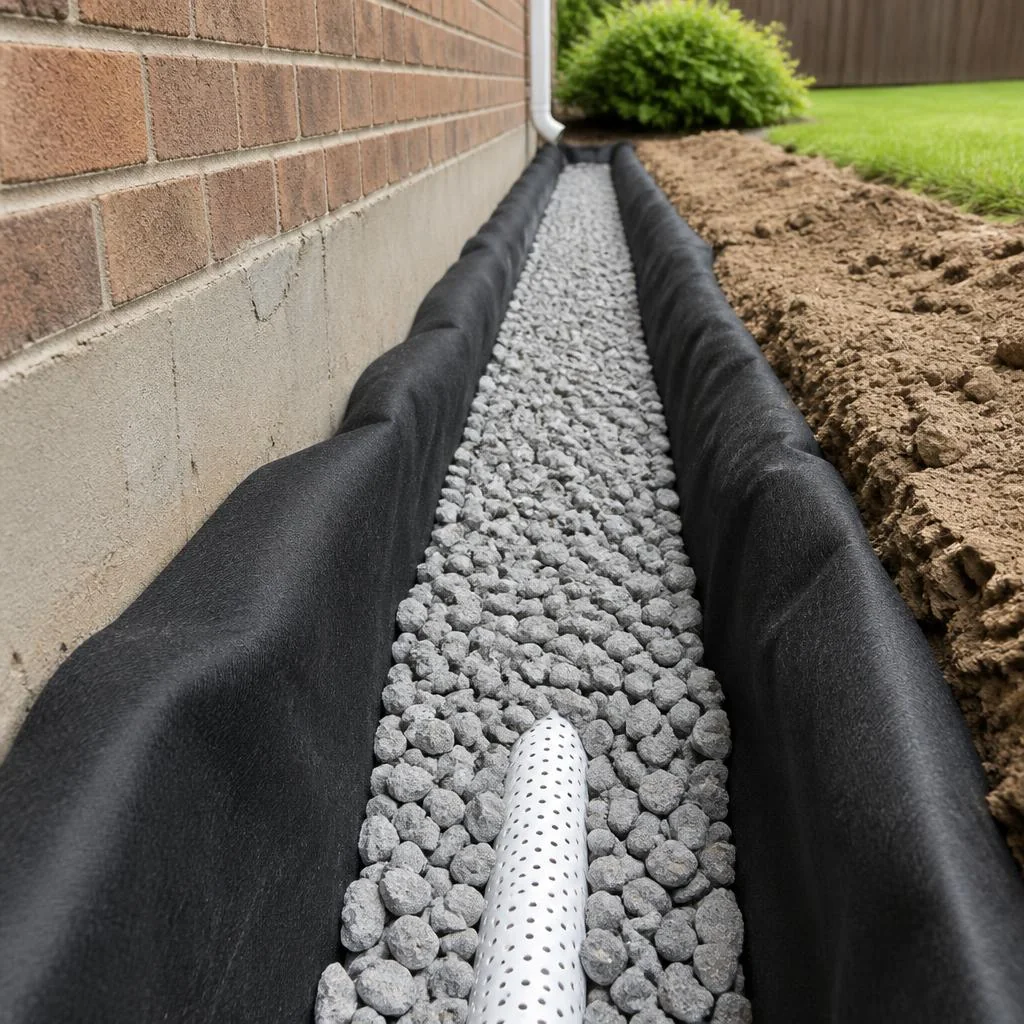
- French drains where subsurface water needs redirection
- Regrading of the first several feet around the home
- Coordinated vegetation adjustments where needed
The right solution depends on the specific home. A recommendation is only made after an on-site inspection.
What to expect
Drainage projects range from very simple downspout work you may not even need us for, all the way up to multi-day installations of buried drain systems. We're straightforward about which category your property falls into.
Drainage is both preventative and corrective. It can reduce the moisture swings that drive foundation movement, but it isn't a magic fix for damage that has already happened. On many homes it works best alongside structural or maintenance measures.
Factors that affect project scope and price
- Number and length of drain runs required
- Depth of installation and existing landscaping
- Discharge locations and any required daylighting
- Regrading effort and existing hardscape
- Access limitations across the property
Frequently asked questions
Will drainage work alone fix my cracks?+
Not usually. Drainage can slow or stop future movement, but it doesn't undo damage that's already occurred. On many properties we recommend drainage in combination with structural work, and sometimes instead of it.
Are French drains always the answer?+
No. A French drain is one tool among several. Sometimes a downspout extension solves the problem. Drainage costs vary widely due to site-specific factors. We recommend the best option based on what the property actually needs after an onsite evaluation.
Do you handle regrading?+
We can address the first several feet around the home, which is usually the area that most affects the foundation. Large landscape regrading is often better handled by a landscape contractor.
How soon should I address drainage issues?+
Sooner is generally better, but it isn't an emergency for most homes. Getting an evaluation ahead of a wet season is a reasonable timeline.
Ready for an honest look at your foundation?
Schedule a free on-site inspection. You'll get a clear explanation of what we observed and what your practical next steps are, with no pressure to commit.